By Staff Reporter
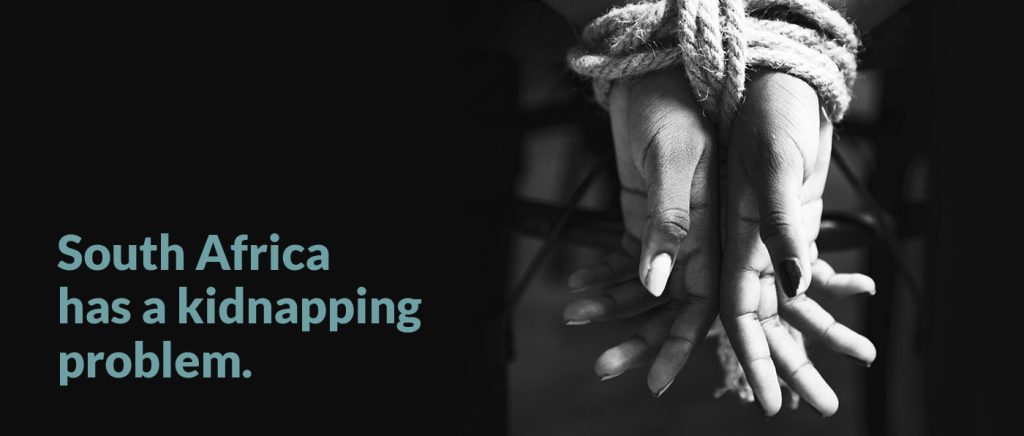
South Africa has a kidnapping problem, and it is growing.
In the 2022/2023 financial year (the most recent year of available statistics), 15,343 kidnapping cases were reported nationally, with more than half occurring in Gauteng. The province, home to South Africa’s economic hub, has become a centre for organised criminal networks that have transformed abduction into a sophisticated and profitable industry.
The days when kidnapping was purely a political or high-value crime are long gone. Today’s syndicates operate through various “business models,” each as ruthless as the next. There are traditional ransom kidnappings, where victims are held for days or weeks while families are extorted. Then, there are kidnappings that start as hijackings or armed robberies, where the victim is taken along as an afterthought or as extra leverage. And finally, there are express kidnappings, where a victim is taken, forced to drain their bank accounts at ATMs, and then released, often within hours.
On a February afternoon this year, just after half past one, one of those hierarchies began to unravel.
Acting on credible intelligence, a joint team made up of four police units and eight private security firms, including Wezindlela, began tracking a suspected kidnapping syndicate believed to be operating around local ATMs. The group had reportedly been targeting victims, forcing them to withdraw cash while being held against their will.
Teams were deployed strategically to maintain surveillance in the area until a vehicle matching the description provided by intelligence sources was identified. Once confirmed, a coordinated takedown was executed.
The suspects were detained at the scene.
What followed highlights the importance of coordination beyond the initial arrest. Information gathered during on-site interviews pointed to a wider network, including a suspected ringleader. This led teams to a second location in Pretoria West, where another suspect was apprehended.
That suspect could be linked to a kidnapping case originating in Mpumalanga. The victims from that case, who had been held by the syndicate, were released following the arrests.
One reason joint operations between private security and the South African Police Service produce results is that neither can do it alone.
Police units carry investigative authority, the legal power to arrest, and access to national intelligence networks. Private security firms, particularly those operating in high-risk response, often have faster ground-level intelligence, greater flexibility of deployment, and in some areas, deeper knowledge of local criminal networks. When the two work from shared information and a common operational picture, the result is something neither could replicate independently.
While law enforcement targets these syndicates, citizens must remain alert to protect themselves.
Kidnapping syndicates rely heavily on predictability. Scouts observe routines, identify soft targets, and plan accordingly. Varying your routes, times, and daily patterns, especially when handling cash, makes you harder to profile.
Stay vigilant while driving; watch for cars that seem to follow you through multiple turns. If you think you’re being followed, head directly to the nearest police station or a busy, well-lit public spot. Avoid going home. If you’re bumped from behind, especially at night, stay inside your vehicle and drive to a safe location before stopping. Promptly reporting any suspected threat can be crucial, as early information often leads to more effective responses.
The greatest risk of express kidnapping occurs at ATMs. Whenever possible, use ATMs located inside banks or shopping centres, avoid withdrawing cash at night, and stay alert to anyone lingering nearby. If you must withdraw money for your assailants, cooperate fully. Your safety takes precedence over your savings.
If you are grabbed, try to stay calm. Note whatever details you can: the number of people involved, what they say, and where you are taken. Cooperate with demands for money. Most express kidnapping victims are released once they have what they came for – the money.
While the statistics paint a concerning picture, operations such as the one near Pretoria show that coordinated efforts are yielding results. For companies like Wezindlela and their partners, the work continues, often out of public view, but with tangible outcomes for those caught in these situations.
For businesses and individuals in higher-risk categories, a relationship with a reputable private security provider is worth serious consideration. The syndicates are organised. The response to them needs to be as well.